The electrical contractors in Cambridge who serve Dorchester, MA work on wood-frame houses built mostly from the early 1900s through the 1950s, homes where fuse boxes still sit in basement utility corners and two-prong outlets line the walls. Knowing what was installed in a house of that age, and what it can no longer handle, shapes every job. Reach out for expert electrical panel upgrade work before a full panel gives out.
Homeowners in Dorchester call a local electrician because these houses carry problems that only show up once you know what was put in them and when.
What Local Electricians Know About Dorchester Homes
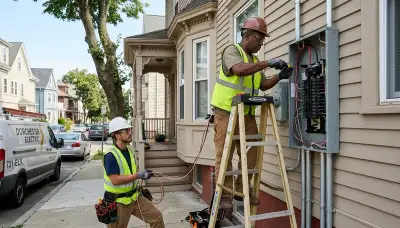
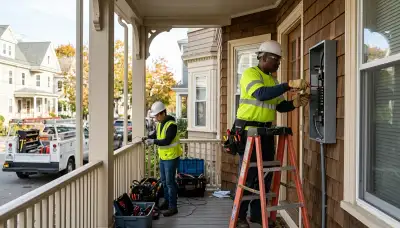
A local electrician working in Dorchester recognizes the basement panel, the knob-and-tube runs overhead, and the two-prong outlets in every room. That knowledge cuts the time spent diagnosing and keeps the repair from missing what is actually wrong.
Most of the work in Dorchester falls into two categories: updating wiring that was never grounded and adding capacity to panels that were sized for a fraction of today's load. Homeowners in nearby Roxbury, MA electrical services face similar situations in houses of the same age.
Get the electrical system looked at before a warm outlet or a breaker that will not reset turns into something that cannot wait.
Electrical Work Matched to How Dorchester Homes Are Built
An off-the-shelf approach fails in Dorchester because the panel is in the basement, the wiring runs through finished ceilings, and the walls are plaster over wood lath. Running a new circuit is not a morning of work when every path to the panel goes through a finished room.
Detached two- and three-family houses here carry separate service equipment for each unit, which changes what a panel upgrade involves. Attached row houses share walls that limit where conduit can travel. Older single-family homes with full basements give better access but often hide decades of added wiring. For specialist work, consider reliable home electrical inspection service to map what is actually there.
Across Dorchester homes, the work that fits these structures includes professional generator installation, quality recessed lighting installation, expert GFCI circuit installation, and specialists in electric car charger installation, each one sized and routed to what the house can actually support.
What the Age of Dorchester Homes Still Decides Today
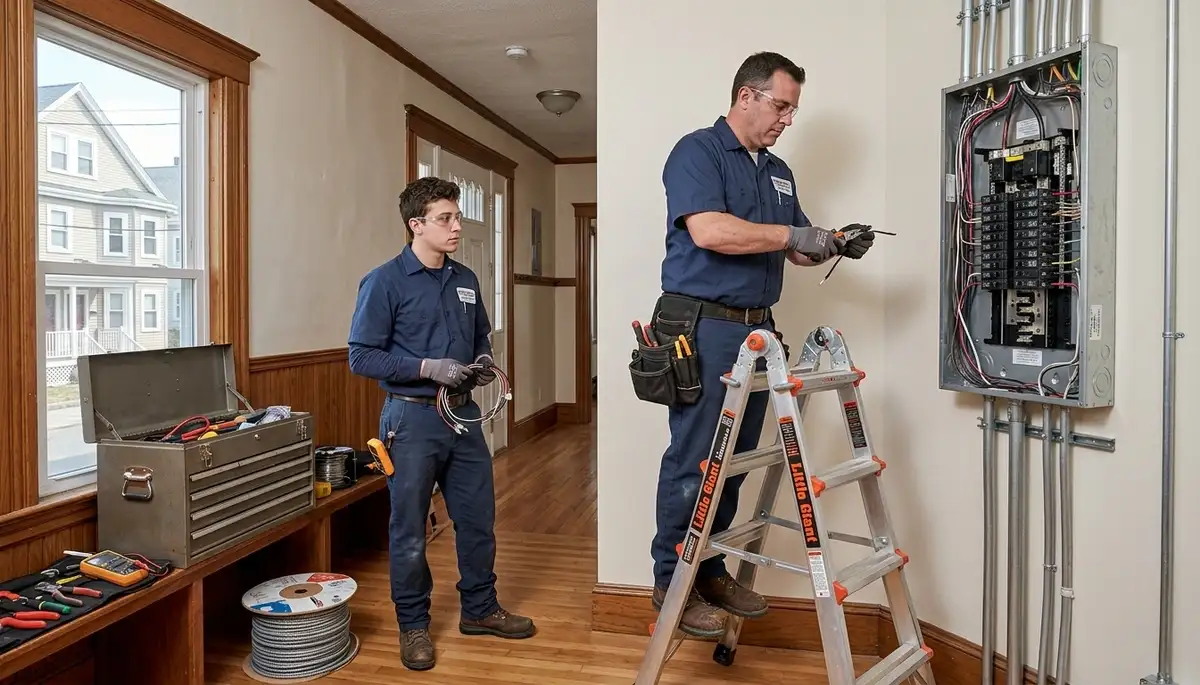
Most houses in Dorchester went up from the early 1900s through the 1950s, a period when panels were sized for lighting and a handful of appliances. Those houses came with fuse boxes, ungrounded two-wire runs, and circuits shared across rooms that now hold refrigerators, window units, and charging devices. Three things follow from that age and still shape the electrical work needed today: the panel is too small, the wiring has no ground, and the circuit count was never enough.
Fuses That Keep Blowing
When a fuse blows every time two appliances run in the same room, the house is telling the homeowner that the circuit was never sized for that load. In Dorchester homes built before the forties, a single fuse often covered an entire floor. Running a microwave and a toaster on the same line trips the protection every time, and the fix is not a bigger fuse but a panel that can carry separate circuits.
Local electricians replace the fuse box with a breaker panel sized for how the home is used now, adding the dedicated circuits the kitchen and bathrooms need so the protection works the way it is supposed to.
Two-Prong Outlets Throughout the House
Two-prong outlets mean the wiring behind them has no ground path. In a Dorchester home where that wiring runs through plaster walls, a fault has nowhere safe to go. Appliances that expect a ground, including most electronics, run unprotected. Over time the insulation on old two-wire runs becomes brittle and can crack at the connections.
Electricians replace two-prong outlets with grounded receptacles or install the outlets with test and reset buttons where a ground wire cannot be run, giving the homeowner protection that meets current requirements. Homeowners in Jamaica Plain, MA residential electricians territory deal with the same ungrounded wiring in houses of the same era.
Outlets Warm to the Touch
An outlet that feels warm is not a minor nuisance. In Dorchester homes built in the late 1960s and early 1970s, aluminum wiring was used in place of copper on branch circuits. Aluminum expands and contracts at a different rate than the devices it connects to, and over decades those connections loosen. A loose aluminum connection generates heat at the point of contact, and that heat does not stop when the outlet is not in use.
Electricians repair aluminum wiring connections with the correct fittings or replace the affected runs, removing the heat source and restoring connections that stay tight.
A Panel That Cannot Keep Up
A car charger, a window air conditioner, and a chest freezer added to a house wired for a fraction of that load will push the panel past what it was built to handle. In Dorchester homes, that original panel was often a sixty-amp service at a time when the house held two or three circuits. Every load added since then has come out of headroom that was already thin, and on a hot afternoon the panel carries all of it at once.
Electricians upgrade the service and replace the panel with one sized for the actual load, adding the circuits the car charger, the air conditioning, and the kitchen each need so the homeowner can run everything without watching the breaker box.
Finished Ceilings That Block the Path
In a Dorchester home with plaster ceilings and no attic access above the living space, running a new circuit from the basement panel to a second-floor room means finding a path that does not open every ceiling between them. Tight lots and attached walls limit where conduit can travel on the outside of the house.
Local electricians plan the route before the first hole is cut, using the basement, interior chases, and existing openings to keep the work contained. The goal is a finished circuit that reaches where it needs to go without a room that has to be repainted afterward.
Call (617) 612-4242 to arrange a no-pressure visit with a local electrician who can look at what the house has and tell the homeowner what it actually needs.
On Call Electrical brings steady, practical work to Dorchester homes that have been waiting too long for it.

Full Electrical Services Available in Dorchester, MA
The work listed here covers what homeowners in Dorchester, MA ask for most. Find what matches the situation and call to talk through the details.
Urgent Electrical Repairs for Dorchester, MA Homes
- Electrical Repair - A breaker that will not reset or an outlet that stopped working needs attention before it spreads to other circuits.
- Outlet Repair - Loose or dead outlets in a Dorchester home often point to a connection that has worked free over decades of use.
- Switch Repair - A switch that sparks or fails to hold the light on is a sign the device inside has worn past the point of safe use.
- Smoke Detector Installation - Old detectors in Dorchester homes lose sensitivity over time and need to be replaced with units that actually respond.
- Fire Alarm Installation - Houses with multiple units need interconnected alarms so a fire anywhere in the building reaches everyone.
If something in the house stopped working or feels wrong, a local electrician can find the source and correct it the same visit.
Panel, Service, and Wiring Work for Dorchester, MA Homes
- Electrical Panel Upgrade - A fuse box or a small breaker panel in a Dorchester home was sized for far fewer circuits than the house runs today.
- Electrical Panel Installation - New panel work in these houses accounts for where the service enters and where the basement allows the box to sit.
- Electrical Wiring - Rewiring a Dorchester home built before the forties means replacing runs that were never grounded and insulation that has hardened with age.
- Electrical Service - The service entrance on a Dorchester house of this age often needs to be upgraded before a new panel can be installed.
- New Construction Wiring - Additions and finished basements in Dorchester homes need wiring that connects cleanly to what the existing panel can carry.
Panel and wiring work in Dorchester takes longer than a newer house because the original installation was never designed to be extended, and doing it right means accounting for what is already there.
Safety and Protection Work for Dorchester, MA Homes
- GFCI Circuits - Kitchens and bathrooms in Dorchester homes built before the 1970s were never wired with the protection required near water.
- GFC Outlets - The outlets with test and reset buttons replace two-prong receptacles where running a ground wire is not possible.
- Whole Home Surge Protection - A power surge travels through every circuit in the house and can damage appliances that were not even on at the time.
- Lightning Surge Protection - A direct strike or a nearby hit sends a surge through the service entrance that a single power strip cannot stop.
- Home Electrical Inspections - An inspection in a Dorchester home built before the fifties often turns up wiring that was added by different hands over the decades.
Safety work in Dorchester homes matters because the wiring behind the walls is often older than the homeowner knows, and what cannot be seen is where the risk sits. A local electrician can walk through the panel and the outlets and tell the homeowner what is safe, what is borderline, and what needs attention before it becomes an emergency. That conversation takes an hour and saves a lot of guessing.
Lighting, Outdoor, and Added-Load Work for Dorchester, MA Homes
- Recessed Lighting Installation - Dorchester homes with low plaster ceilings can carry recessed fixtures once the circuit is sized for the added load.
- Landscape Lighting - Outdoor lighting runs in Dorchester need weatherproof connections and circuits separate from the house wiring.
- Electric Car Charger Installation - A Level 2 charger in a Dorchester home requires a dedicated circuit the original panel was never built to supply.
- Ceiling Fan Installation - Older boxes in Dorchester ceilings were not rated for a fan's weight and movement and need to be replaced before a fan goes up.
- Security Lights - Motion-activated lights on a Dorchester home run on outdoor circuits that need proper grounding and weatherproof housings.
Added loads in Dorchester homes land on panels that were already running close to their limit, and the right approach is to confirm what the panel can carry before the new circuit goes in so the homeowner is not back at the breaker box a month later.