
The electrical services in Cambridge network reaches Allston homes that were mostly built in the decades before and just after the forties - wood-frame construction over full basements, with panels sized for a load that looked nothing like what sits on those circuits today. A breaker that will not reset or an outlet warm to the touch often points to a panel that was never meant to carry what a modern kitchen or home office demands. Local electricians handling professional electrical panel upgrade work understand exactly how these houses are put together and what it takes to bring them current.
Houses built this way need electricians who have worked inside them before - who know where the wiring runs, where the panel sits, and why a job that looks simple from the outside can open into something more involved once the basement ceiling comes down.
Knowing Allston Homes Changes How the Work Gets Done
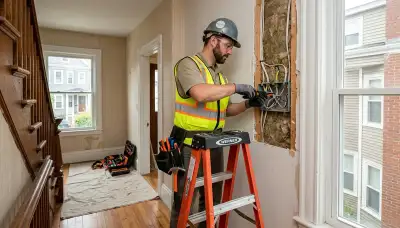
A local electrician who has worked across Allston knows that most of these houses carry their panel in the basement, that the wiring runs through finished walls and old framing, and that what looks like a quick fix from the outside often involves tracing circuits through three floors of original construction.
Two kinds of work come up most often here: panels that have run out of room and original wiring that was never grounded. Homeowners in Brighton, MA electrical services territory face similar situations in houses built the same way and the same decade.
If something in your home feels off - a breaker that trips at dinner, a switch that runs warm - get it looked at before a small problem turns into a repair that opens walls.
Electrical Work Matched to How Allston Homes Are Built
An approach that works in a newer house with open framing and a modern panel does not transfer cleanly to a wood-frame home over a full basement where circuits share conduit from a fuse box that has not been touched in decades.
Attached homes here share walls and sometimes share service runs, which changes how a new circuit gets pulled. Detached single-family houses often have a long run to a garage or shed that aged separately from the main house. Both situations call for expert electrical wiring work that accounts for how the structure was built, not just what the homeowner wants added.
Four services that fit these homes directly: quality home electrical inspection to map what is actually there, reliable GFCI circuit installation where two-prong outlets still sit near water, specialist outlet repair for connections that have loosened over decades of use, and professional smoke detector installation for houses that have never had interconnected detection through every floor.
What the Age of Allston Homes Still Decides Today
Most of the houses in Allston went up in the years before and through the forties, a time when a sixty-amp fuse box was standard and the idea of a dishwasher, a chest freezer, and a window unit all running at once was not part of the design. Three things follow from that directly: the panels are small, the wiring is ungrounded, and the circuits were laid out for a household that used far less power than any family uses now.
Fuses Instead of Breakers
A homeowner who opens the panel door and finds a row of screw-in fuses is looking at a system that was sized for a fraction of what the house now pulls. When a fuse blows repeatedly, the temptation is to replace it with a larger one - a fix that removes the only protection the circuit has and leaves the wiring carrying more than it was built to handle.
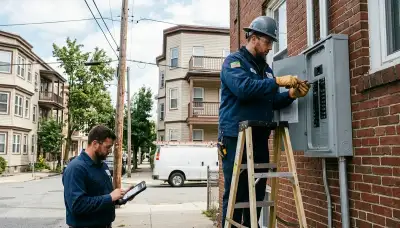
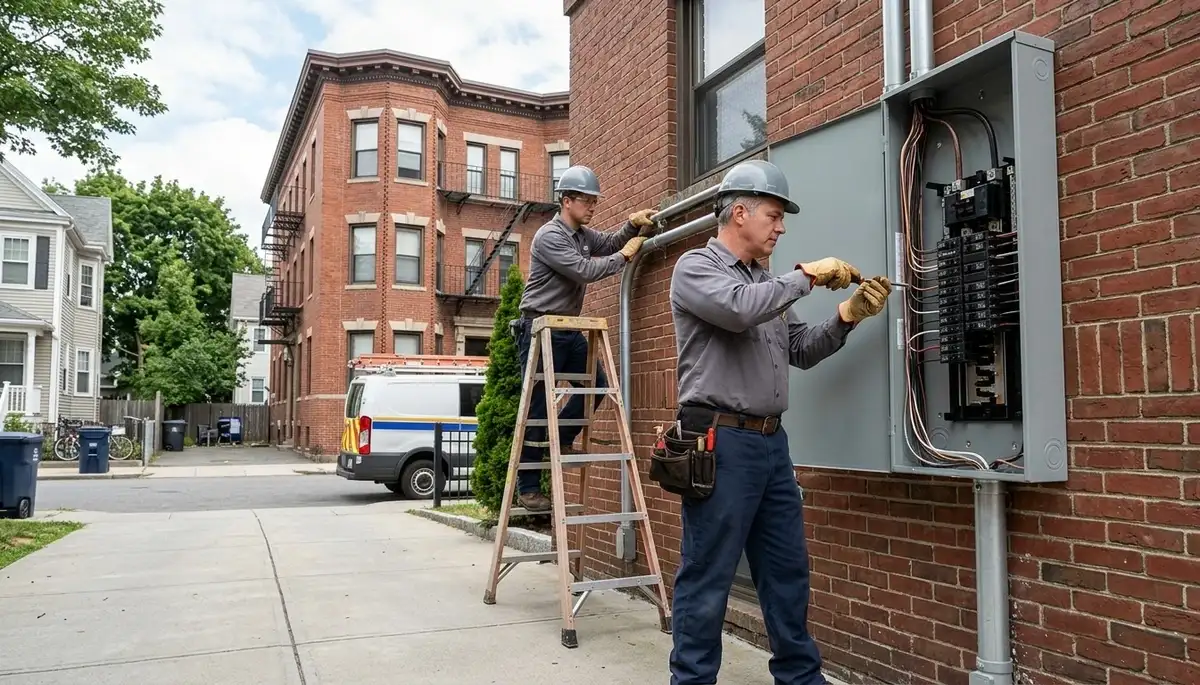
Local electricians replace fuse panels with breaker boxes sized for what the house actually needs, and the work gets done in a single day without touching the finished walls above.
Two-Prong Outlets Throughout the House
Two-prong outlets are the visible sign that the wiring behind them was installed before grounding was required. Plugging a three-prong adapter into an ungrounded outlet does not add protection - it just changes the shape of the hole. Appliances that expect a ground path do not get one, and a fault has nowhere safe to go.
Adding a ground to existing circuits or replacing outlets with GFCI-protected versions gives the homeowner real protection and brings those receptacles in line with what the house should have had from the start.
Connections That Run Warm
Decades of use work connections loose. A wire that was tight when the house was wired can develop enough resistance at the connection point to generate heat every time current flows through it. The homeowner notices an outlet that feels warm, or a light that dims on one circuit when something else kicks on.
Replacing loose or corroded connections and bringing those circuits back to a solid termination stops the heat at the source and restores steady voltage to everything on that circuit.
Modern Loads on a Panel Built for Less
A car charger, a window unit added to a second floor, a chest freezer in the basement - each one was added to a service that was sized long before any of them existed. On a warm afternoon when the air conditioning runs hard, the panel is carrying a load it was never designed to see.
Adding a subpanel or upgrading to a full two-hundred-amp service gives the house room for what it already runs and what the homeowner plans to add, without the worry that one more appliance will trip everything on the floor. Homeowners in electrical contractor in Brookline, MA face the same capacity problem in houses built the same way.
Basement Access and Finished Walls
In a wood-frame house over a full basement, getting a new circuit from the panel to a second-floor room means running wire through finished walls or finding a path through the framing that does not require opening every ceiling along the way.
Local electricians who know these houses plan the route before the first hole is cut, use the basement framing where it is accessible, and fish the rest through existing cavities - keeping the work clean and the disruption to one or two small openings rather than a full wall.
Call (617) 612-4242 to arrange a visit from a local electrician who can walk through the house with you, look at what is there, and tell you exactly what needs attention - no pressure, no guesswork.
On Call Electrical does work in Allston homes that holds up the way the house was meant to.

Full Electrical Services Available in Allston, MA
The list below covers the range of electrical work available to homeowners in Allston, MA. Find what matches your situation and call to talk through it.
Urgent Electrical Repairs for Allston, MA Homes
- Electrical Repair - A breaker that will not reset or an outlet that stopped working points to something that needs a look before it gets worse.
- Outlet Repair - Loose connections behind a receptacle generate heat every time current flows; replacing the outlet and the termination behind it stops that.
- Switch Repair - A switch that sparks, runs warm, or fails to hold its position is a connection problem, not a wear problem.
- GFCI Circuits - Kitchens and bathrooms in these older houses often still have standard outlets within reach of water; adding GFCI protection is a straightforward correction.
- Fire Alarm Installation - Houses with a single detector in the hallway are not covered floor to floor; interconnected alarms give every room a fighting chance.
If any of these match what you are seeing at home, a local electrician can confirm the cause and fix it the same visit.
Panel, Service, and Wiring Work for Allston, MA Homes
- Electrical Panel Upgrade - A panel that was sized for a much smaller load needs more room before the next appliance is added.
- Electrical Panel Installation - Replacing a fuse box with a modern breaker panel is the single change that makes the most other work possible.
- Electrical Wiring - Original wiring in these houses was not sized for today's loads; running new circuits through the existing framing restores the margin the house needs.
- Electrical Service - A full service upgrade brings the house up to what it is actually being asked to carry.
- New Construction Wiring - Additions and finished basements need circuits that meet current requirements, not extensions of what was already there.
These homes were wired for a household that used far less power than any family uses today; the work below closes that gap without tearing the house apart to do it.
Safety and Protection Services for Allston, MA Homes
- Home Electrical Inspections - Knowing exactly what is in the walls before buying or renovating a house this age saves a homeowner from surprises after the fact.
- Whole Home Surge Protection - A single surge event can damage every appliance connected to the panel; whole-home protection stops it at the entry point.
- Lightning Surge Protection - A direct or nearby strike sends a spike through every circuit in the house; dedicated protection keeps the panel and everything downstream intact.
- Smoke Detector Installation - Interconnected detectors through every floor mean that when one sounds, they all sound.
- GFC Outlets - Replacing two-prong ungrounded outlets near water with GFCI-protected receptacles removes a risk that has been in the house since it was built.
These services together address the risks that come with houses built before grounding, arc protection, and whole-home surge defense were standard - and they do it without a full rewire. A local electrician can walk through the house, identify which protections are missing, explain the risk each one carries, and handle the work in a planned visit that keeps disruption to a minimum.
Lighting, Outdoor, and Added-Load Work for Allston, MA Homes
- Recessed Lighting Installation - Adding recessed fixtures to a finished ceiling in a wood-frame house takes planning; the right path through the framing keeps the ceiling intact.
- Electric Car Charger Installation - A dedicated circuit sized for a Level 2 charger is a separate job from what the panel was built for; it needs its own breaker and its own run.
- Landscape Lighting - Outdoor circuits that were never part of the original plan need a proper feed from the panel, not an extension of an interior circuit.
- Security Lights - Hardwired exterior lighting on a house this age needs a circuit that was designed for outdoor use, not borrowed from the nearest interior outlet.
- Generator Installation - A whole-home or transfer-switch generator gives the house a backup when the main feed goes down, without back-feeding the line.
These are the loads that houses in Allston were never designed to carry, and adding them the right way means running dedicated circuits, sizing the panel for what is actually there, and making sure every outdoor run is protected for the conditions it will see.