
The homes in Chelsea, MA keep electrical contractors in Cambridge busy for good reason: most were built before the fifties and sixties, carry panels that were never sized for modern loads, and need an electrician who knows what that means before the first wire is touched. A network of local electricians handles everything from a breaker that will not reset to a full panel swap, and every job starts with understanding what is already inside the walls. Homeowners here also benefit from expert electrical panel upgrade work matched to what these houses actually need.
When the work involves wiring that has not been touched in decades, a general electrician who does not know these houses will spend the first hour figuring out what a local one already knows walking in the door.
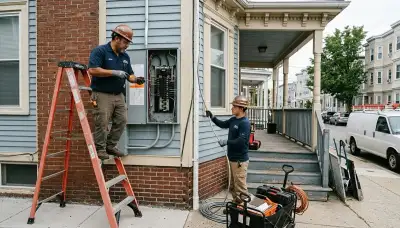
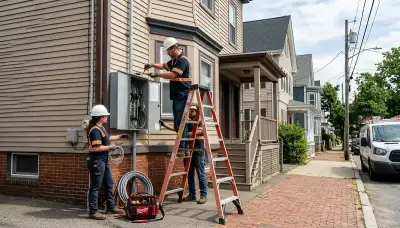
Knowing Chelsea Homes Changes What Gets Done Right
A local electrician working in Chelsea knows that most houses here sit on full basements, carry their panels on an interior basement wall, and were built close together on narrow lots where access to the side of the house is tight. That shapes every job before a single tool comes out.
Two kinds of work come up again and again in Chelsea: panels that have run out of room for new circuits, and wiring that was installed before grounding was required. Homeowners in nearby Everett, MA electrical services recognize the same problems in houses of the same age.
If an outlet feels warm or a breaker trips every time two appliances run at once, getting it looked at now costs far less than waiting until it fails.
Electrical Work Matched to How Chelsea Houses Are Built
An off-the-shelf approach fails in Chelsea because running a new circuit through a house with a finished basement and plaster walls is not the same job it is in a house with open framing. The path the wire takes, and what it has to pass through, changes the scope entirely.
Attached row houses share walls and sometimes share service equipment, which means a job on one unit has to account for what sits on the other side. Detached two- and three-family homes carry their own separate panels and long outdoor runs. Reliable home electrical inspections help sort out what each structure actually has before work begins.
The work that fits these homes best includes quality electrical panel installation for houses that have never had a modern box, specialist GFCI circuit installation near every water source, professional smoke detector installation in homes where the wiring predates modern detection requirements, and expert outlet repair for outlets that have gone warm or stopped holding a plug.
What the Age of Chelsea Homes Still Decides Today
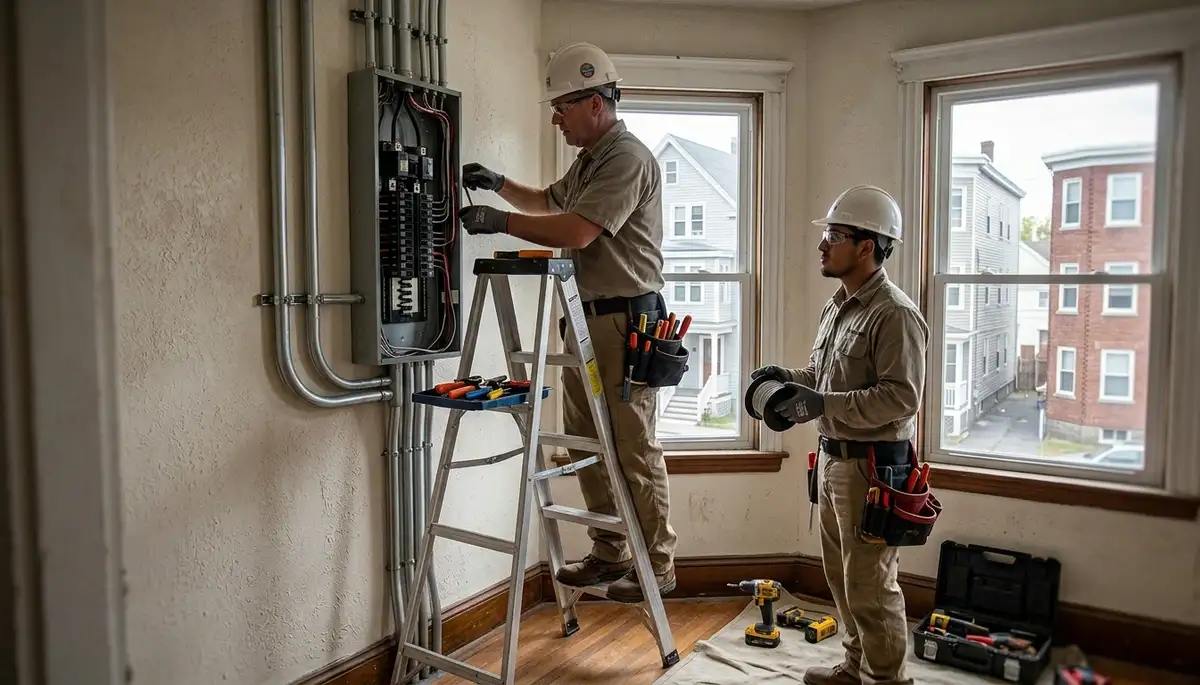
Most of the houses in Chelsea went up before the forties and into the early fifties, built as wood-frame attached and semi-detached homes on narrow lots with full basements. Those houses were wired for a world without central air, electric ranges drawing forty amps, or a car charger in the garage. Three things follow from that and still shape every job: the panels are small, the wiring is ungrounded, and the circuits were counted for a household that used a fraction of what a home draws today.
Fuses Instead of Breakers
A homeowner opens the basement panel and finds a fuse box with no room left and fuses that have been swapped for the wrong size. Behind that is a sixty-amp service that was never designed for what the house runs now. Left alone, an overloaded fuse box becomes a fire risk, not just an inconvenience.
Local electricians replace fuse boxes with properly sized breaker panels and run the service upgrade at the same time, so the new box is not immediately full the day it goes in. Work in nearby Malden, MA follows the same pattern in houses of the same generation.
Two-Prong Outlets Throughout the House
Two-prong outlets tell a homeowner that the wiring behind them was installed before grounding was required. Every modern appliance that calls for a three-prong plug is running without the protection the third prong provides. Over time, ungrounded circuits also make electronics more vulnerable to damage from a power surge.
Local electricians add grounding to existing circuits where the wiring allows it and install the outlets with test and reset buttons where it does not, bringing each room up to what a modern household needs without tearing out walls that do not need to come down.
Lights That Dim When Appliances Start
When the lights drop every time the refrigerator compressor kicks on or the bathroom exhaust fan starts, the circuits are sharing more load than they were built to carry. In houses from this era, that usually means two or three heavy draws are on the same circuit that was run when the house had far less plugged into it.
Adding dedicated circuits for the appliances that pull the most power stops the dimming and keeps the panel from working harder than it should. It also means the refrigerator and the microwave are no longer competing for the same wire.
A Car Charger the Panel Was Never Sized For
A level-two car charger draws enough power that a panel sized for a house built before the forties cannot absorb it without giving something else up. On a cold morning when the charger runs overnight and the electric heat is already on, the panel is carrying a load it was never designed to see.
Adding a dedicated forty-amp circuit for the charger, or upgrading the service to handle it cleanly, means the car charges overnight without tripping a breaker or pulling down the rest of the house. Homeowners can run the charger, the heat, and the kitchen at the same time without worrying about what trips next.
Tight Lots and Finished Basements
In Chelsea, houses sit close together on narrow lots, and most basements were finished at some point, which means the path a new circuit has to take is rarely a straight line. A job that would take a morning in a house with open framing can take a full day when every run has to go around finished ceilings and through walls that were not meant to be opened.
Local electricians plan the route before the work starts, use existing access points where they exist, and keep the number of openings to a minimum. The homeowner gets the new circuit without a ceiling that looks like it was put back by someone in a hurry.
Arrange a no-pressure visit with a local electrician who knows these houses by calling (617) 612-4242. A look at the panel and the wiring takes less than an hour and tells the homeowner exactly what needs attention.
On Call Electrical delivers work that holds in Chelsea homes, job after job.

Full Electrical Services Available in Chelsea, MA
The work below covers what homeowners in Chelsea, MA ask for most. Find what fits the situation and reach out to get it scheduled.
Urgent Electrical Repairs for Chelsea, MA Homes
- Electrical Repair - A breaker that trips and will not reset, or an outlet that stopped working, gets looked at before the problem spreads to other circuits.
- Outlet Repair - Outlets that feel warm to the touch or no longer hold a plug firmly are a sign the connection behind the wall has loosened or burned.
- Switch Repair - A switch that sparks, feels hot, or controls a light that flickers on and off needs attention before the wiring behind it fails entirely.
- GFCI Circuits - Kitchens and bathrooms in older Chelsea homes often lack the outlets with test and reset buttons that code now requires near every water source.
- Fire Alarm Installation - Houses where the original wiring has never been updated often lack the detection coverage that a modern household needs in every room.
Call (617) 612-4242 to get urgent work scheduled before a small problem becomes a larger one.
Panel, Service, and Wiring Work for Chelsea, MA Homes
- Electrical Panel Upgrade - A panel that was sized for a much smaller load gets replaced with one that can handle what the house actually draws today.
- Electrical Panel Installation - Houses that still carry a fuse box get a modern breaker panel that has room for the circuits the household needs now and later.
- Electrical Wiring - Old wiring that was installed before grounding was required gets assessed and replaced circuit by circuit, starting with the rooms that draw the most.
- Electrical Service - A service entrance that was sized for sixty amps gets upgraded so the panel can carry a full modern load without running at its limit.
- New Construction Wiring - Additions and converted spaces in Chelsea homes get wired from scratch to match what the rest of the house needs to carry.
Panel and wiring work in houses built before the fifties requires an electrician who knows what to expect inside the walls before the first panel cover comes off.
Safety and Protection Work for Chelsea, MA Homes
- Whole Home Surge Protection - A single device at the panel stops a voltage spike from reaching every outlet and appliance in the house at once.
- Lightning Surge Protection - Homes in Chelsea that have added electronics and appliances over the years are carrying far more to lose from a surge than they were when the house was built.
- Home Electrical Inspections - A full inspection tells the homeowner exactly what the wiring looks like, where the risks are, and what order to address them in.
- Smoke Detector Installation - Detectors placed in the right locations and wired into the panel give the house coverage that a battery-only unit in the hallway cannot.
- Generator Installation - A standby generator wired to the panel keeps the house running when the power goes out, without running an extension cord through a window.
Safety work in Chelsea homes matters most when the wiring behind the walls has not been looked at in years. A home electrical inspection is the right place to start. Homeowners who have not had the wiring checked since they moved in often find that a single visit surfaces two or three things that were quietly getting worse. Scheduling an inspection before something fails is the lowest-cost way to know what the house actually needs.
Lighting, Outdoor, and Added-Load Work for Chelsea, MA Homes
- Recessed Lighting Installation - Adding recessed lights to a room with plaster ceilings takes planning, but the result is a room that works the way the homeowner wants it to without surface-mounted fixtures that do not fit the house.
- Electric Car Charger Installation - A dedicated circuit for a level-two charger means the car charges overnight without pulling down the rest of the panel.
- Landscape Lighting - Outdoor lighting runs that have aged differently from the house get replaced with circuits that are properly protected and will not trip every time it rains.
- Security Lights - Motion-activated lights wired to a dedicated circuit give the homeowner coverage at every entry point without relying on an extension cord run through a door frame.
- Ceiling Fan Installation - Adding a ceiling fan to a room that was not wired for one means running a new circuit, not just swapping a fixture, and that is a job that takes the right tools and the right knowledge of what is already in the ceiling.
Outdoor and added-load work in Chelsea homes often surfaces wiring that was run years ago without the protection it needed. Getting it done right the first time means not revisiting the same circuit a year later.