
The network of electrical contractors in Cambridge handles work across Boston every day, where most houses went up before the sixties and still carry the panels and wiring from that era. A breaker that will not reset, an outlet warm to the touch, or lights that dim when the air conditioning starts are the signs these homes show when the original wiring is running out of room. Homeowners here need expert electrical panel upgrade work matched to what was actually installed, not a generic fix.
That history shapes every job, which is why Boston homeowners reach for a local electrician who already knows what is behind the walls rather than one who has to figure it out on the way.
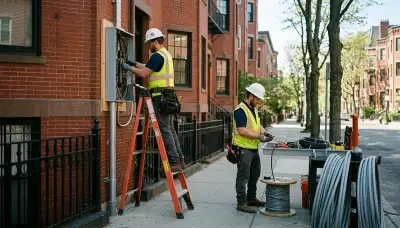
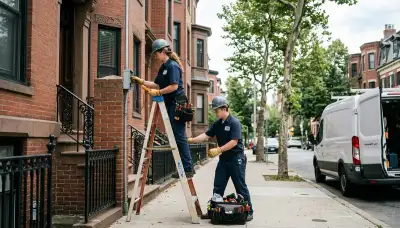
Knowing Boston Homes Changes What the Work Involves
A local electrician working in Boston recognizes a fuse box on sight, knows where the panel sits in a row house versus a detached triple-decker, and understands which circuits were added over the decades versus which ones came with the house.
Homes here most often need panel work and grounding corrections, two jobs that are straightforward when you know the house and complicated when you do not. Homeowners in nearby Somerville, MA electrical services face similar demands from houses of the same era.
If something in your home is warm, flickering, or tripping repeatedly, get it looked at before a small fault becomes a larger one.
Electrical Work Matched to How Boston Homes Are Built
An approach that works in a newer house with open walls and a modern panel often runs into real obstacles in Boston, where tight basements, plaster walls, and shared service entrances in attached homes change what every job actually involves.
Detached triple-deckers carry long runs from panel to upper floors, while attached row houses sometimes share a wall with service equipment that complicates access. Older wood-frame homes with finished basements require careful routing for any new circuit, and quality GFCI circuit installation in those kitchens and bathrooms means working around original plaster rather than drywall.
Across Boston homes, four types of work come up again and again: professional home electrical inspection to find what the panel is hiding, reliable outlet repair where two-prong receptacles have been in place for decades, specialist smoke detector installation in homes with multiple floors and limited ceiling access, and expert generator installation for homeowners who want to keep the house running when the grid does not.
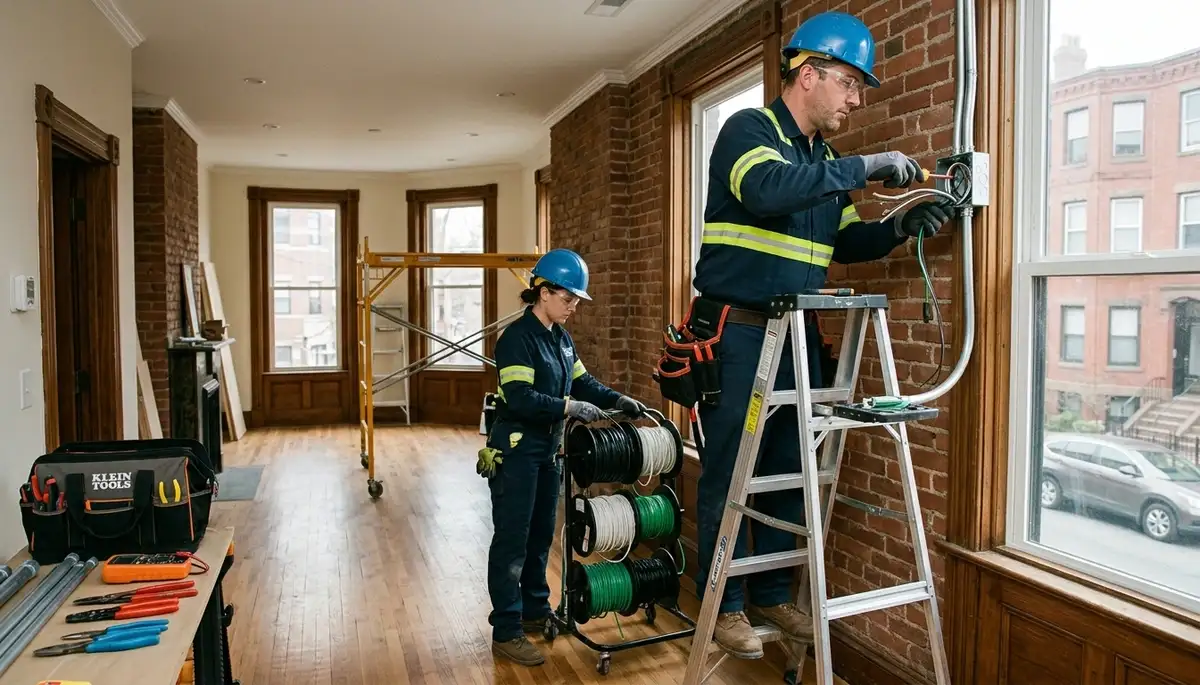
What the Age of Boston Homes Still Decides Today
Most houses around Boston went up in the decades before and just after the Second World War, with another wave through the fifties and into the early sixties. Those homes were wired for sixty to one hundred amps, built without grounding conductors, and fitted with panels that were never meant to carry a modern kitchen, central air, and a car charger at the same time. Three things follow directly from that: the panel is often at capacity, the outlets in older rooms are two-prong, and any aluminum wiring installed in a later renovation runs hot at its connections.
Fuses That Keep Blowing
A fuse box that blows repeatedly is not a nuisance, it is the system doing exactly what it was designed to do when the load exceeds what the wiring can carry. In Boston homes with original sixty-amp service, adding a window unit or a dishwasher can push a circuit past its limit every time both run together. Left alone, the temptation to install a larger fuse creates a wire that overheats without ever tripping protection.
Local electricians replace the fuse box with a modern breaker panel sized for what the house actually runs, and homeowners in Everett, MA with the same original service get the same correction.
Outlets Warm to the Touch
An outlet that feels warm when nothing heavy is plugged in points to a connection that is not making full contact, which generates heat rather than passing current cleanly. In Boston homes where aluminum wiring was added during a renovation in the late sixties or early seventies, that heat builds at every device and junction box over time. The connection loosens further with each heating and cooling cycle until it arcs.
Local electricians identify aluminum wiring at the panel and at each device, then install rated connectors or replace the affected runs so that every connection stays cool and stable under load.
Two-Prong Outlets Throughout the House
Two-prong outlets are the visible sign that a house was wired before grounding was required. In Boston homes built before the early sixties, most rooms still have them, and the absence of a ground path means that a fault in an appliance has nowhere to go except through the person holding it. Adapters do not correct the problem, they only change the shape of the plug.
Replacing ungrounded outlets and adding the test-and-reset outlets near sinks and counters brings the home up to what modern appliances expect and removes the fault path that older wiring leaves open.
A Panel That Has No Room Left
Boston homes that started with a one-hundred-amp panel and have since added central air, a second refrigerator, and a home office are often running on a panel with no empty slots and breakers that are doubled up. When a car charger or a heat pump goes on the list, there is simply nowhere to put it. A house asked to carry modern loads on a panel sized for a much smaller one will show the strain as flickering lights and breakers that trip under ordinary use.
Adding a subpanel or upgrading to a two-hundred-amp service gives the house room for what is already running and what the homeowner plans to add, so the car charger, the air conditioning, and the kitchen all run without competing for the same limited capacity.
Wiring That Runs Through Finished Walls
In Boston homes with plaster walls and finished basements, running a new circuit from the panel to a room that needs it is not a matter of dropping a wire through an open stud bay. The route goes through plaster, around fire blocking, and sometimes across a ceiling that a homeowner does not want opened. That physical constraint changes how long the job takes and how it is approached.
Local electricians who work in these houses regularly know the routing options: fishing through existing cavities, using surface conduit where walls cannot be opened, and planning the path before any work starts so that the finished result requires the fewest patches.
Call (617) 612-4242 to arrange a no-pressure visit with a local electrician who can look at what your home has and tell you what it actually needs.
On Call Electrical brings work that holds to every Boston home it touches.

Full Electrical Services Available Across Boston, MA
The work below covers what homeowners around Boston call about most. Find what fits your situation and reach out to get it handled.
Urgent Electrical Repairs in Boston, MA
- Electrical Repair - A breaker that will not reset or an outlet that has stopped working entirely needs attention before the fault spreads to other circuits in the home.
- Switch Repair - A switch that sparks, feels warm, or controls nothing at all is a connection problem that gets worse the longer it runs current through a damaged contact.
- Outlet Repair - Dead outlets and two-prong receptacles throughout a Boston home are a sign that the original wiring is at the end of what it can reliably do.
- GFCI Outlets - Kitchens and bathrooms in older Boston homes often lack the test-and-reset outlets required near water, leaving the homeowner without the protection that stops a fault from becoming an injury.
- Electrical Wiring - Wiring that has been spliced, extended, or run without a ground over the decades needs to be traced and corrected before it causes a failure at the worst moment.
Call (617) 612-4242 when something in the house stops working or starts acting wrong.
Panel, Capacity, and Wiring Work in Boston, MA
- Electrical Panel Upgrade - A panel that was sized for a much smaller load than the house carries now needs to be replaced before the homeowner adds anything else to it.
- Electrical Panel Installation - Boston homes that still have a fuse box need a modern breaker panel that can handle what the house runs today and what it will run tomorrow.
- Electrical Service - The service coming into the house sets the ceiling for everything else; homes that started at sixty amps and have never been updated are working against themselves.
- New Construction Wiring - Additions and finished basements in Boston homes need circuits run correctly from the start so that the new space does not overload the existing panel.
- Home Energy Audit - An audit finds where the electrical system is losing efficiency and shows the homeowner exactly which upgrades will make the biggest difference in how the house runs.
Homes here were wired for a much lighter load than they carry now, and a panel or service upgrade is often the single change that makes every other improvement possible.
Safety and Protection Services in Boston, MA
- Smoke Detector Installation - Boston homes with multiple floors and finished attics need detectors placed where smoke actually travels, not just where the original wiring made it convenient.
- Fire Alarm Installation - A whole-home alarm system gives every floor of a Boston triple-decker or row house the coverage that a single detector in the hallway cannot provide.
- Whole Home Surge Protection - A surge that enters through the service line can reach every device in the house in the same instant; protection at the panel stops it before it travels.
- Lightning Surge Protection - Homes with tall trees nearby or exposed service lines are more vulnerable to a voltage spike that the panel was never designed to absorb on its own.
- Home Electrical Inspections - An inspection of a Boston home before a purchase or a renovation shows exactly what the panel, the wiring, and the grounding can and cannot do.
Safety work in an older Boston home is not about adding features, it is about closing the gaps that the original installation left open and making sure the house protects the people living in it. A local electrician can walk through the home, identify every gap, and explain what correcting each one involves before any work begins.
Lighting, Outdoor, and Added-Load Work in Boston, MA
- Electric Car Charger Installation - A dedicated circuit for a car charger keeps the vehicle charged overnight without pulling from the circuits the rest of the house depends on.
- Recessed Lighting Installation - Recessed lighting in a Boston home with plaster ceilings requires a plan for routing that avoids opening more ceiling than necessary.
- Landscape Lighting - Outdoor lighting runs from the panel to fixtures across a yard, and the run needs to be sized and protected for what it will carry year-round.
- Security Lights - Motion-activated lights at the back of a detached garage or along a long driveway need a circuit that reaches them without voltage drop over the distance.
- Ceiling Fan Installation - Adding a ceiling fan to a room that was wired only for a light fixture requires a circuit check and often a box replacement before the fan can be hung safely.
Boston homes are being asked to carry more than they were built for, and the work in this group brings the electrical system up to what the homeowner actually needs without overloading what is already there.