The electrical contractors in Cambridge who serve Charlestown, MA work on row houses and attached brick homes built mostly from the early 1900s through the mid-twentieth century, where panels land in basement utility areas and circuits were never sized for the loads a household runs today. Knowing how these houses are built changes what every job actually involves. Homeowners here often find a breaker that will not reset or an outlet warm to the touch before they call - and a network of local electricians who understand these houses can trace the cause without guesswork. Professional electrical panel upgrade work is one of the most common requests, because a box sized for a fraction of today's draw cannot safely carry what has been added to it.
Charlestown homeowners reach a local electrician rather than a general one because these houses ask questions a stranger cannot answer without opening walls and starting over.
Knowing Charlestown Homes Changes Every Electrical Job
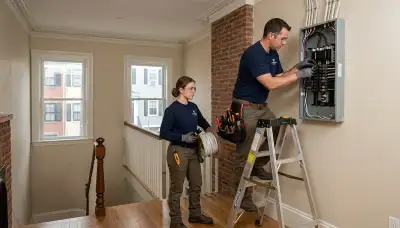
A local electrician working in Charlestown knows that most of these homes keep the panel in the basement, that wiring runs through finished walls in attached rows, and that adding a single circuit can mean a half-day of careful work rather than a quick pull. That knowledge shapes the estimate before the first tool comes out.
Two kinds of work come up most often in Charlestown: panels that have run out of room and wiring that was installed before grounding was required. Homeowners in nearby Chelsea, MA residential electricians deal with similar attached-home challenges, though the construction details differ house to house.
Getting a local electrician to look at a problem early keeps a small issue from becoming one that opens ceilings.
Electrical Work Matched to How Charlestown Homes Are Built
An off-the-shelf approach fails in Charlestown because attached row homes share walls, basement panels sit close to finished ceilings, and running a new circuit means planning the path before the work starts rather than after.
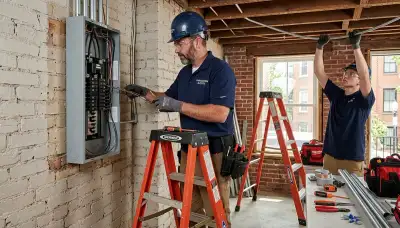
Brick attached rows require fishing wire through plaster and masonry, which adds time and care. Wood-frame detached homes on tight lots need outdoor runs planned around shared fences. Converted multi-family houses carry wiring from two or three different eras in the same walls. Reliable home electrical inspection work maps what is actually there before anything is changed.
Charlestown homes built across several decades benefit from expert electrical panel installation, quality GFCI circuit protection near every water source, specialist smoke detector installation on every floor, and professional outlet repair wherever two-prong receptacles remain.
What the Age of Charlestown Homes Still Decides Today
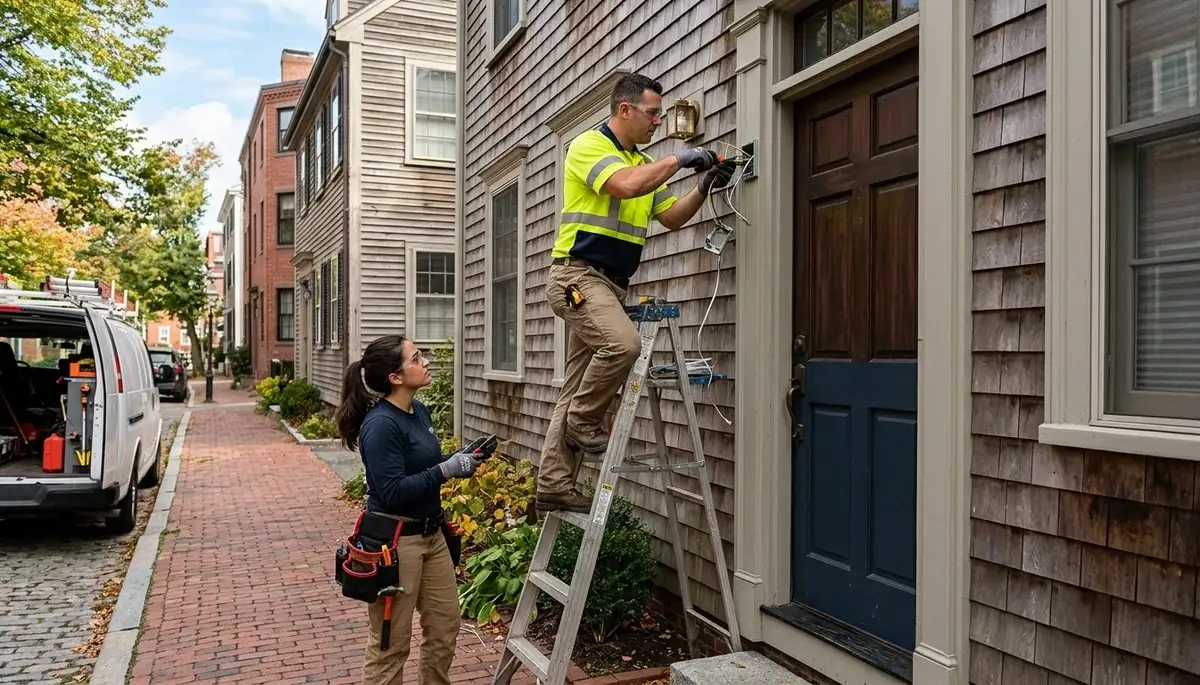
Most houses in Charlestown went up from the late 1800s through the mid-twentieth century, with a second wave of attached and converted homes added through the 1970s and 1980s. Homes from those earlier decades were wired for sixty amps or less, with no grounding conductor, no arc-fault protection, and circuits shared across rooms that now run refrigerators, dishwashers, and multiple devices at once.
Fuses Instead of Breakers
When a homeowner opens the panel and finds a fuse box rather than breakers, the house is carrying a system sized for a load that no longer matches what the household runs. A blown fuse that keeps blowing points to a circuit being asked to carry more than it was built for, and replacing fuses without addressing the cause pushes heat into connections that were not designed for it.
Local electricians replace fuse panels with breaker boxes sized for what the home actually draws today. Homeowners in Somerville, MA electrical contractor territory face the same fuse-box question in houses from the same era, and the correction follows the same logic.
Two-Prong Outlets Throughout the House
Two-prong outlets signal that the wiring behind them has no ground path. Plugging a three-prong adapter into an ungrounded outlet does not fix the problem - it hides it. Sensitive electronics and appliances that rely on a ground for safe operation are left exposed, and a fault has nowhere to go except through the device or the person holding it.
Local electricians run a ground where the wiring allows it, install GFCI-protected outlets where a ground cannot be added, and document what was done so the homeowner knows exactly what changed and why.
Outlets Warm to the Touch
An outlet that feels warm after normal use is carrying more resistance than it should. In homes where aluminum wiring was used during the late 1960s and early 1970s, that warmth comes from connections that have loosened and oxidized over decades of use. Left alone, the heat at those connections builds until insulation softens or a connection fails entirely.
Local electricians identify aluminum wiring, treat or replace the connections at every device, and restore the path to one that carries the load without generating heat. Two things improve immediately: the outlets stop running warm and the circuits stop tripping under normal use.
A Panel That Cannot Handle What Was Added
A car charger, a window air conditioner, or a new appliance added to a home that was wired for a much smaller draw pushes the panel past what it was sized for. On a hot afternoon when the air conditioning is running and the charger is pulling full power, the panel is doing work it was never designed to do, and the margin for anything else disappears.
Local electricians assess what the home is being asked to carry, upgrade the panel to a size that matches the actual load, and run dedicated circuits for the equipment that needs them. The homeowner can run the charger, the air conditioning, and the kitchen without watching the breaker box.
Wiring Paths Through Attached Walls
In a Charlestown row home, the wall between units is not an option for running new wiring. Every new circuit has to find a path through finished plaster, around masonry, and down to the basement panel without disturbing the neighboring unit or opening more of the wall than necessary.
Local electricians plan the route before the work starts, use the basement ceiling and existing chases where they exist, and patch what they open so the finished room looks the way it did before the job began. The work gets done with the least disruption the structure allows.
Call (617) 612-4242 to arrange a no-pressure visit from a local electrician who can look at what your Charlestown home is running and tell you plainly what it needs.
On Call Electrical handles the work in Charlestown, MA with the same care every time.

Full Electrical Services Available Across Charlestown, MA
The work listed below covers the range of what local electricians handle for Charlestown homeowners. Find what matches your situation and call to talk through it.
Urgent Electrical Work for Charlestown, MA Homes
- Electrical Repair - A breaker that will not reset or an outlet that stopped working in a house this old needs a look before it becomes something larger.
- Switch Repair - A switch that sparks, feels warm, or no longer holds its position is a connection problem, not a switch problem.
- Outlet Repair - Two-prong outlets and dead receptacles in Charlestown homes point to wiring that needs attention, not just a new cover plate.
- GFCI Circuits - Kitchens and bathrooms in older homes often have no ground-fault protection at all; adding it is the first line of defense near water.
- Fire Alarm Installation - Smoke detectors that are more than a decade old or missing from upper floors leave a gap that no homeowner should carry.
If any of these match what you are seeing, a local electrician can walk through the house and tell you what is involved.
Panel, Service, and Wiring Work for Charlestown, MA Homes
- Electrical Panel Upgrade - A panel with no room left or one that was sized for a fraction of today's load cannot safely carry what has been added to the house.
- Electrical Panel Installation - Replacing a fuse box with a properly sized breaker panel is the single change that gives a Charlestown home room to grow.
- Electrical Wiring - Old wiring in these homes was installed without a ground path; replacing it brings the house to what modern loads require.
- Electrical Service - The service coming into a Charlestown home was sized for a different era; upgrading it is what makes a panel upgrade complete.
- New Construction Wiring - Additions and converted spaces in Charlestown homes need wiring that matches the load and the structure, not what was done decades ago.
These jobs change what the home can safely carry and what the homeowner can add to it without worrying about the panel.
Safety and Protection Work for Charlestown, MA Homes
- Whole Home Surge Protection - A single power surge can reach every circuit in the house; protection at the panel stops it before it reaches any device.
- Lightning Surge Protection - Homes in Charlestown that take a nearby strike without panel-level protection can lose appliances, wiring, and more in seconds.
- Home Electrical Inspections - An inspection on a house this old tells the homeowner exactly what the wiring is, what it can carry, and what needs attention before it fails.
- GFC Outlets - Ungrounded outlets near sinks and in bathrooms are a risk that a single device swap can address in the right circumstances.
- Smoke Detector Installation - Every floor of a Charlestown home needs a working detector; older homes often have gaps that a local electrician can close in a single visit.
These services address the risks that are hardest to see and most important to close before something goes wrong. A home electrical inspection is the fastest way to know where the gaps are, and surge protection at the panel is the most efficient way to cover every circuit at once. For a house this age, both are worth doing together.
Lighting, Outdoor, and Added-Load Work for Charlestown, MA Homes
- Electric Car Charger Installation - A dedicated circuit sized for a charger keeps the panel from running out of room every time the car is plugged in.
- Recessed Lighting Installation - Recessed fixtures in plaster ceilings require a careful approach; local electricians plan the path before cutting anything.
- Landscape Lighting - Outdoor runs on a Charlestown lot need to be buried and protected; a circuit added without planning the path degrades faster than the fixtures.
- Ceiling Fan Installation - Older boxes in Charlestown ceilings were not rated for a fan's weight or movement; replacing the box is part of the job, not an add-on.
- Security Lights - Motion-activated lights on a tight lot need circuits that reach the exterior without running through shared walls.
These are the loads that Charlestown homes are being asked to carry now, on wiring and panels that were sized long before any of them existed. A local electrician who knows these houses can add the capacity without overloading what is already there.